Sushi restaurant · Albufeira
Yummy's Sushi
Table bookings confirmed by the dining room, and the panel where the room decides them.
The address opens the real site, exactly as it stands today.
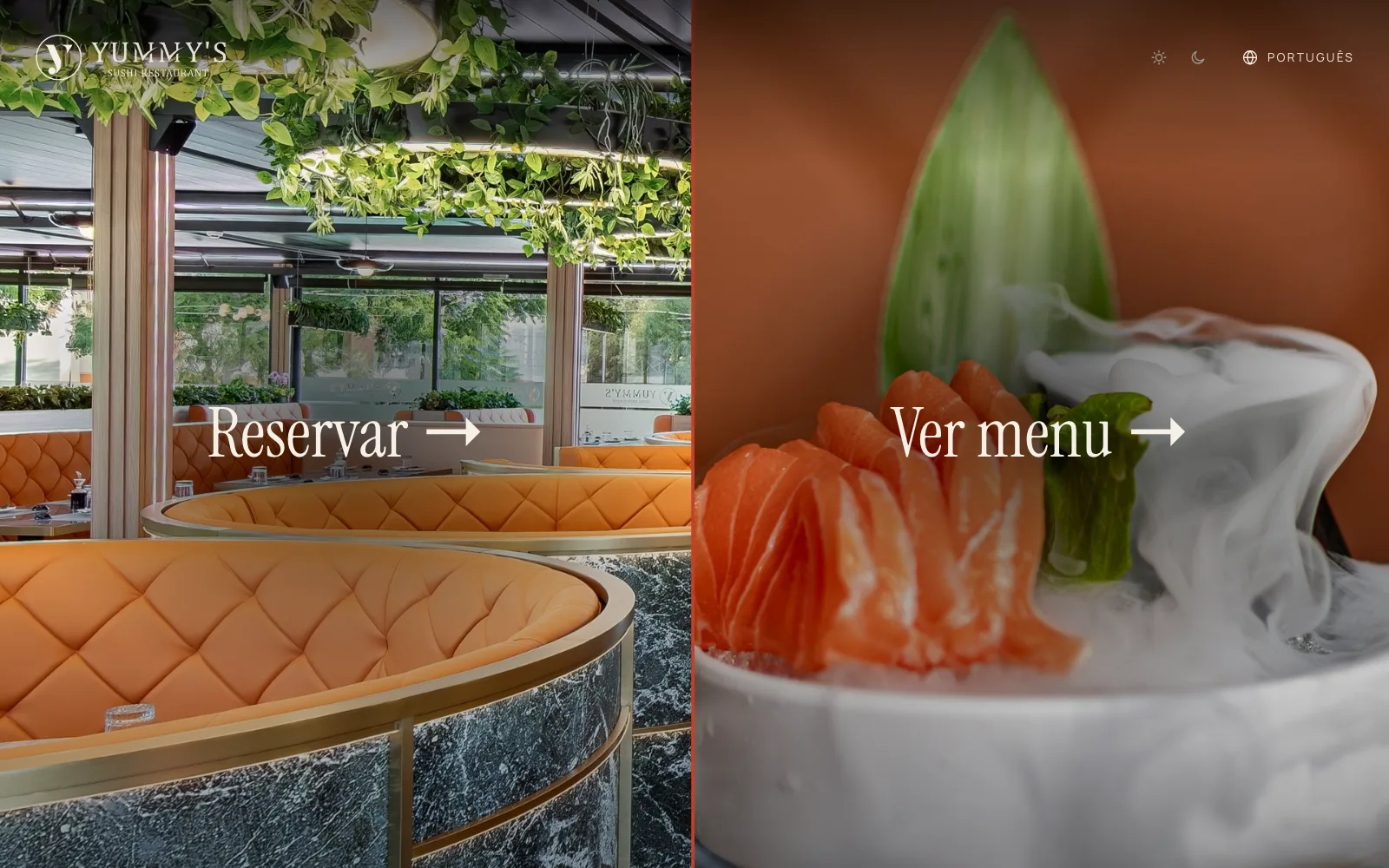
A dining room in Albufeira takes guests who do not all speak the same language, and whether there is a table is decided by whoever is on the floor, not by a calendar. So a booking is a request: the guest picks the day, the service, the time, how many people and whether they would rather sit inside or on the terrace, and the answer comes from the restaurant.
On the other side is the staff panel, built for whoever is serving. Requests arrive with a notification, the list refreshes itself while the screen is open, and each one closes with one of two actions: confirm with a table, or decline with a reason.
The guest never makes an account. They keep a link of their own to the booking, saved in the browser they booked from, and that link is where they see whether it was confirmed, which table they have and how to cancel.
How it works, in three pieces
- The schedule is computed, not written
- The times a guest can pick come from the restaurant's rules stored in the database: the services, and the days lunch does not open. When the house moved to dinner every day with only Monday and Tuesday lunch closed, one row changed in the database — not a sentence on the site that somebody had to remember to fix.
- Only the room assigns the table
- Confirming a request means choosing a table, and that table is checked against the other bookings for the same day and service before it is assigned. Declining means giving a reason, and the guest sees that reason on their booking page: nobody is left with a no and nothing else.
- The link is the key
- Each booking has an address with a secret in it, and that address is what opens it. There is no lookup by phone number on the guest side: in a neighbourhood restaurant, anyone who knew a person's number would see their booking. A wrong link shows exactly the same page as one that never existed.
Four screens from the site
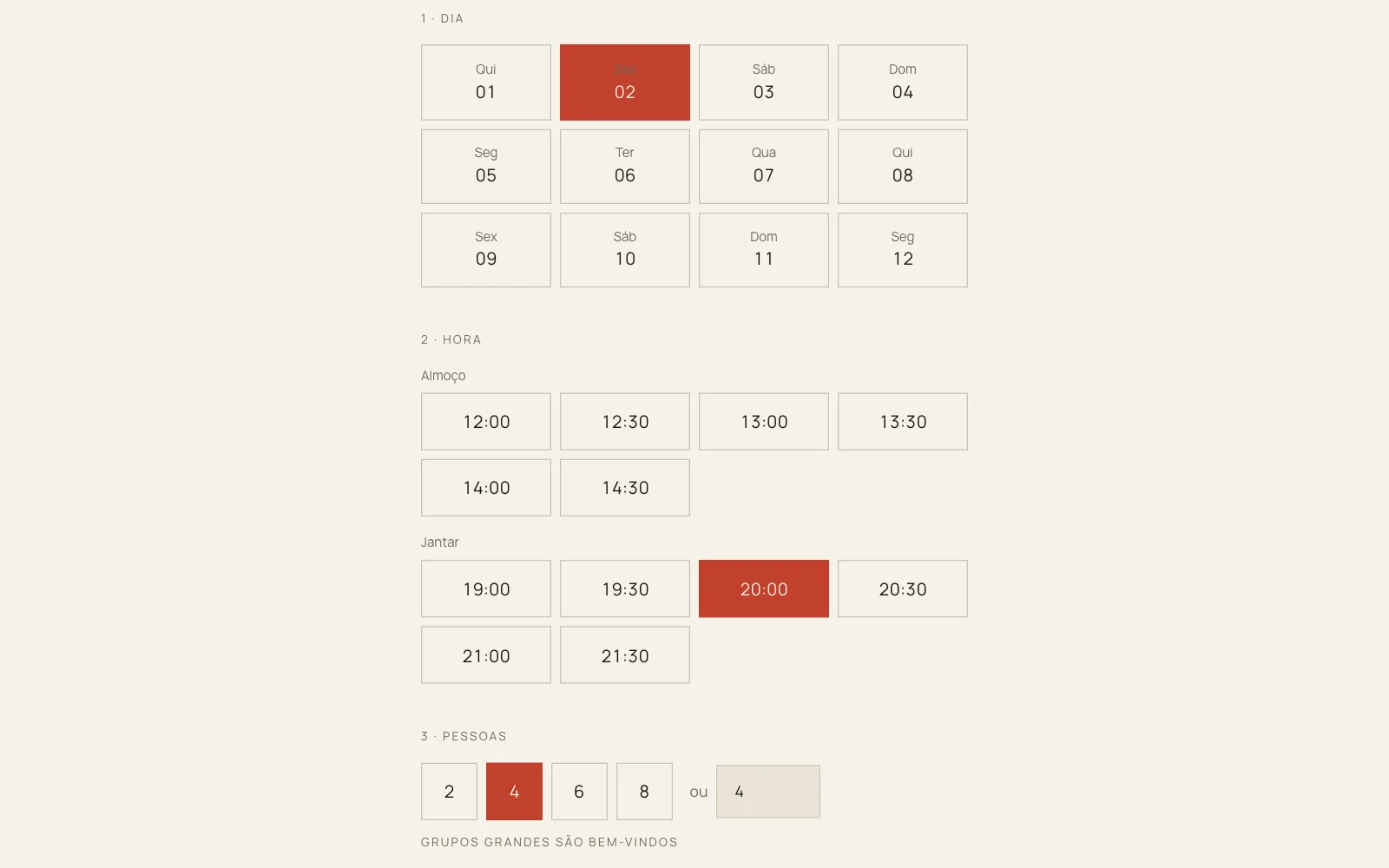
Day, service, time, party
The request is put together on one screen: the day, a time within whichever service is open that day, and the number of people. The times listed are the ones the house rules allow.
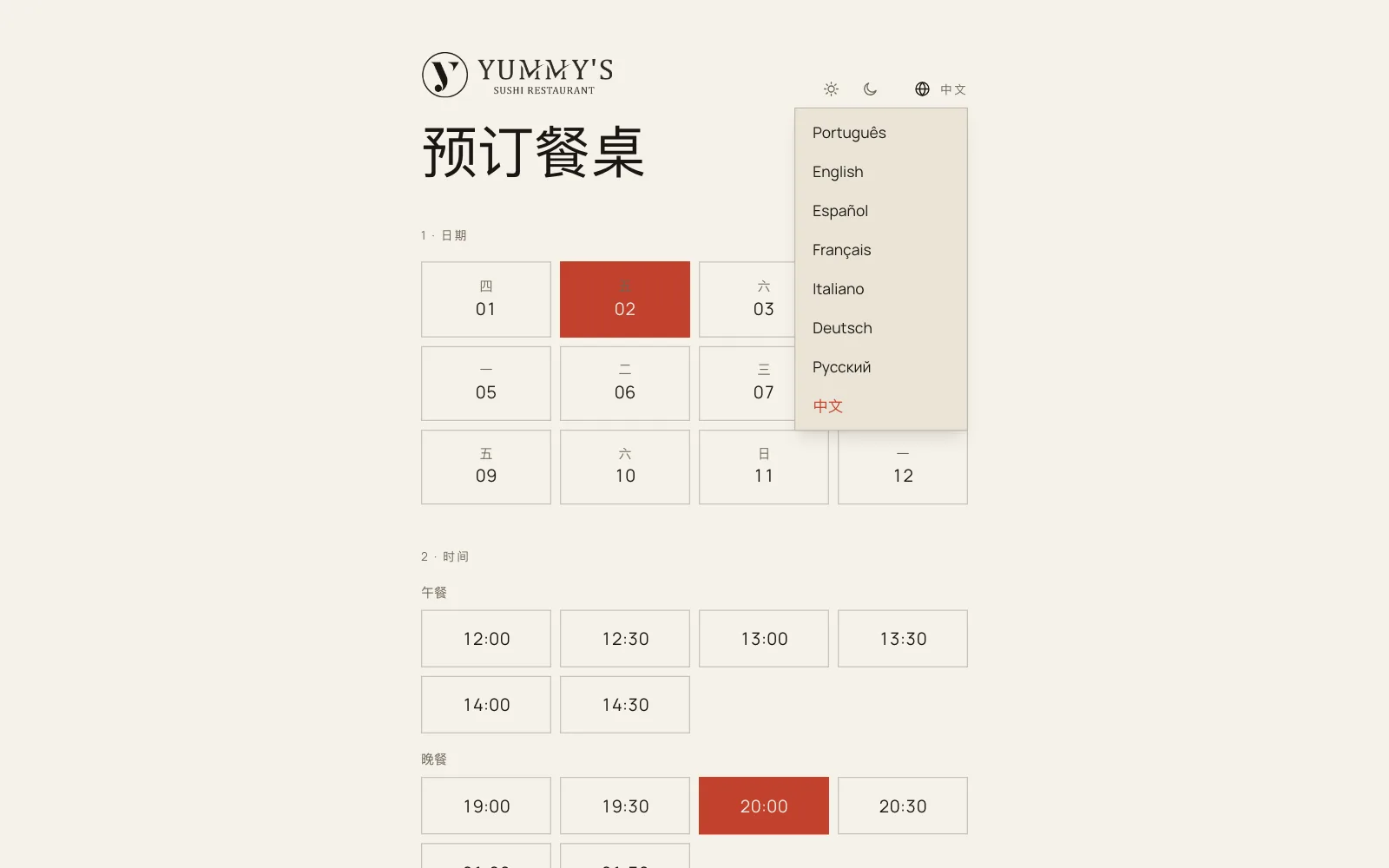
Eight languages, each in its own script
The same screen in Chinese, with the language list open. Every language is shown under its own name, in its own script — nobody reading Russian looks for "Russian".
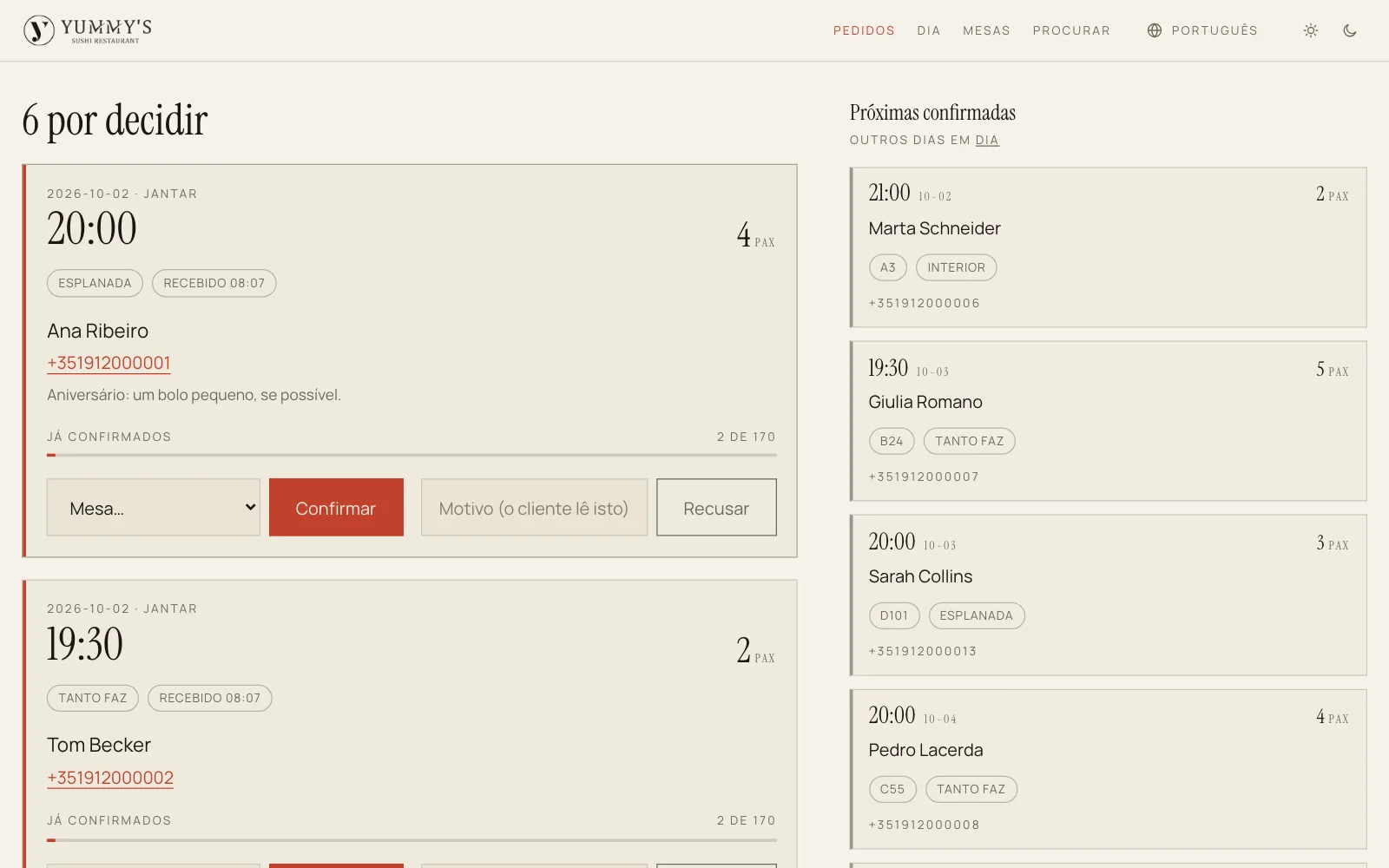
Requests waiting for an answer
The panel opens on the requests waiting for a reply, each with the table choice beside the confirm button and the reason field beside decline. On the right, the next confirmed bookings. The names are demo data.
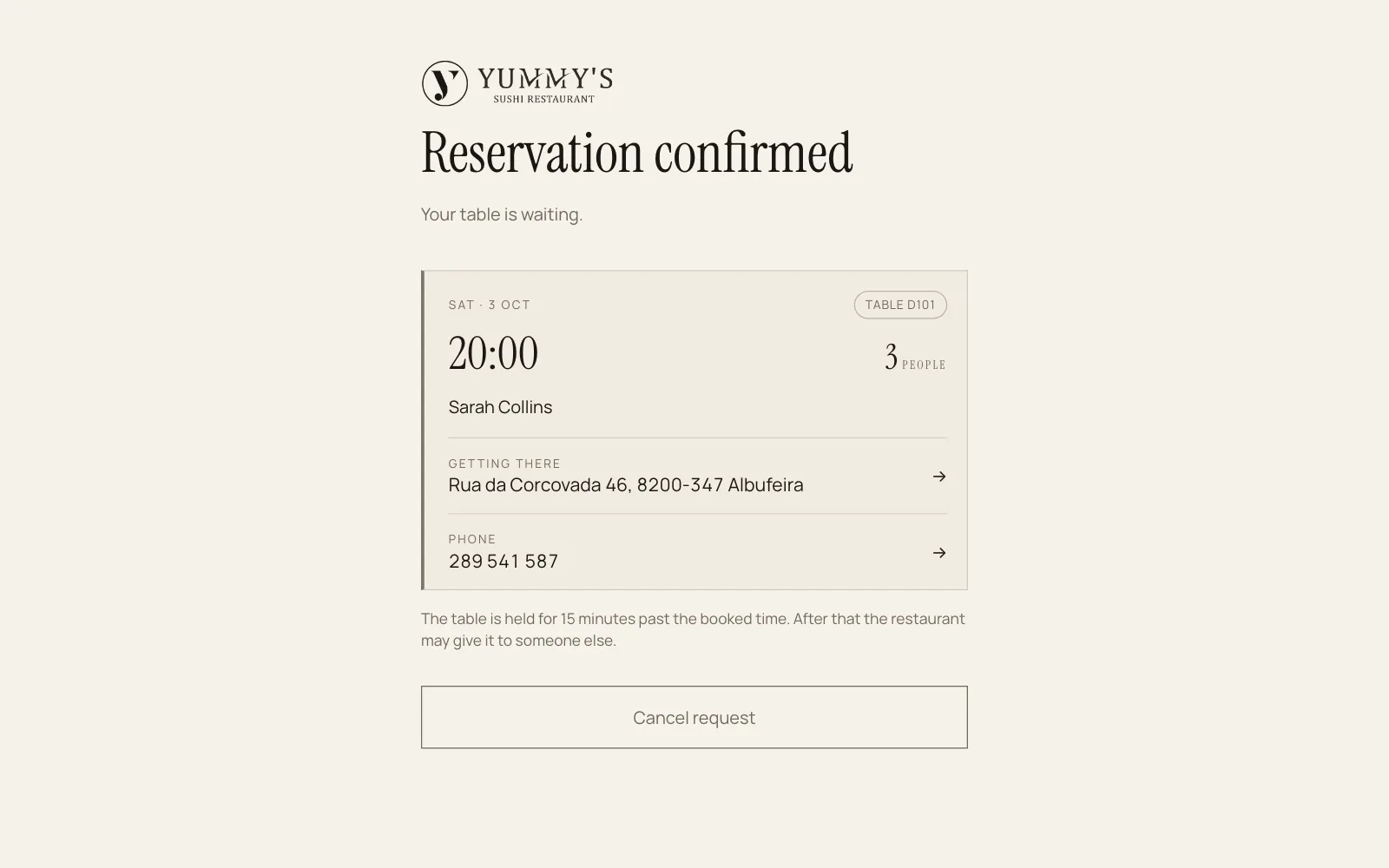
The booking page, from the guest's side
A confirmed booking, in English: the table assigned, how to get there, the restaurant's phone number and the button to cancel. It is the same page the link opens at any time.
Other websites
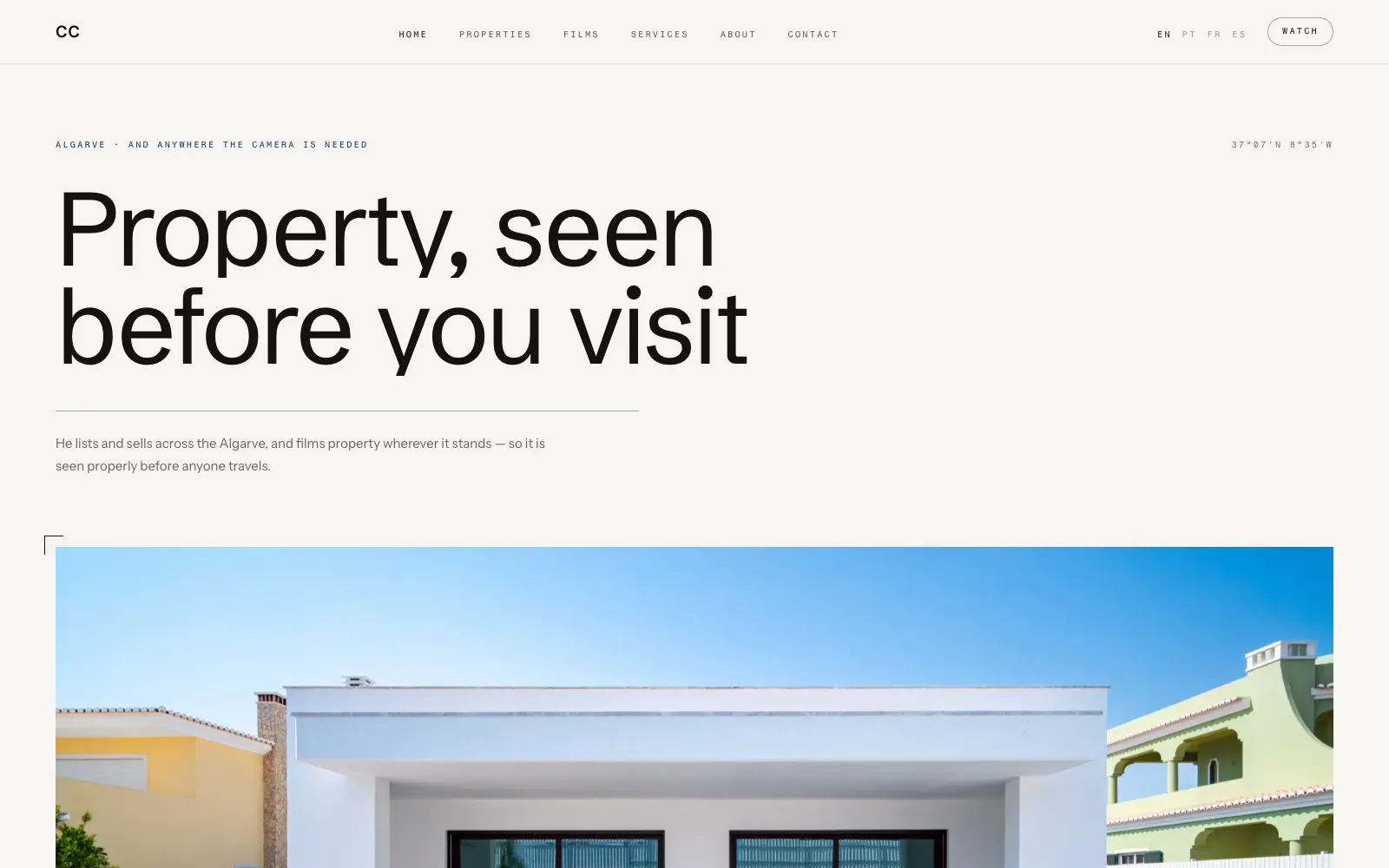
Property consultant · Alvor, Algarve
Christopher Cabrita
The site of a property consultant who sells in the Algarve and films property anywhere, with the two doors set out in plain view.
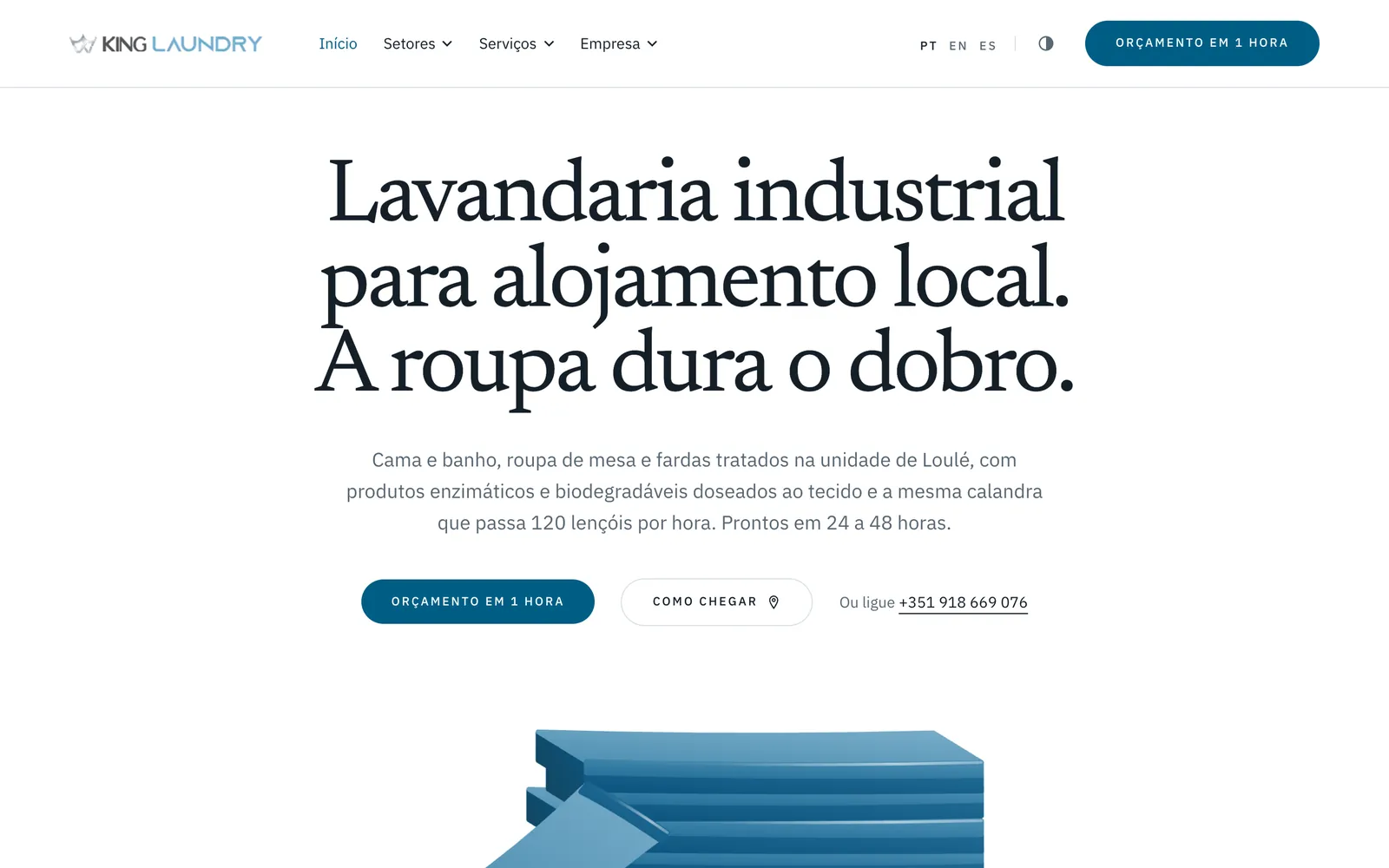
Industrial laundry · Loulé
King Laundry
Textile collection and delivery for hotels, holiday rentals, restaurants and clinics.
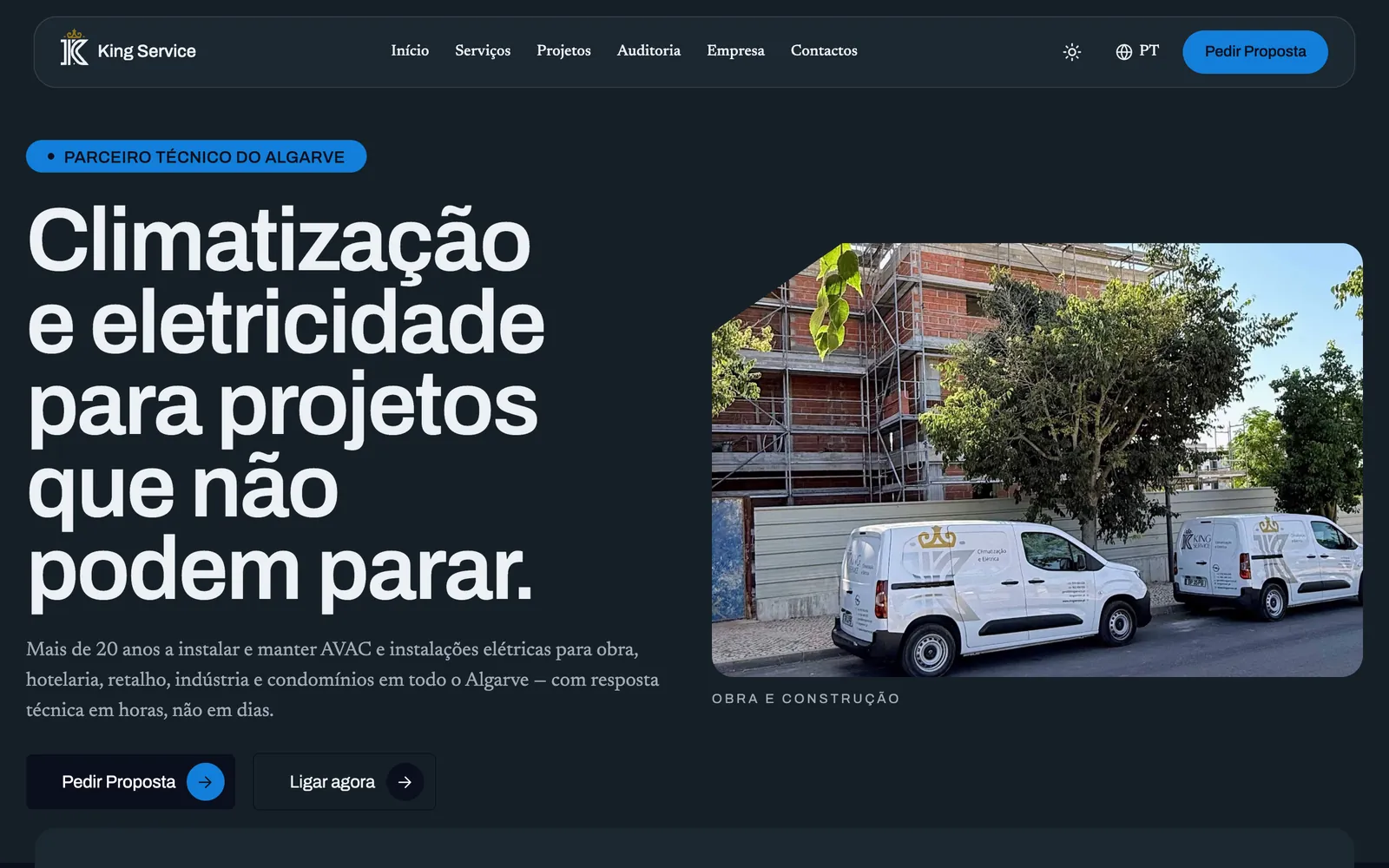
HVAC and electrical · Algarve
King Service
Installation and maintenance of HVAC and electrical systems for hotels, buildings and retail.

Construction and refurbishment · Algarve
King Build
Contracting and refurbishment for hotels, buildings, retail and new build.